
Compounded Pharmacies
Explained: How to Identify
Safe, High-Quality Providers
This guide explains what compounded pharmacies do, how they differ from traditional pharmacies, and which credentials signal safety and quality. It highlights licensing, sterile standards, and accreditation to help patients choose trustworthy providers.
Understanding Compounded Pharmacies: What Patients Should Know About Safety, Quality, and Credentials
When your treatment plan includes customized medications—especially injectables or hormone therapies—it’s likely those prescriptions come from a compounded pharmacy. These specialized facilities play a vital role in tailoring medications to meet your unique needs. But what exactly is a compounded pharmacy, and how do you know the one supplying your medication is safe and trustworthy?
Let’s break it down in simple terms.
What Is a Compounded Pharmacy?
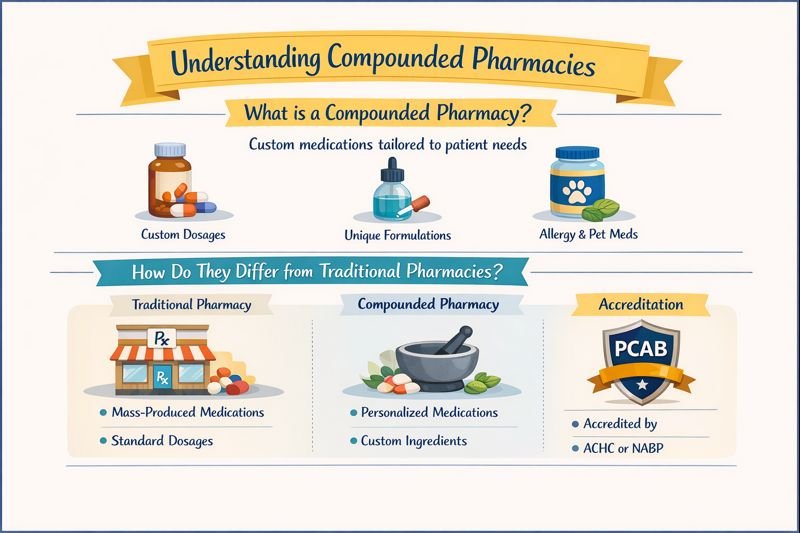
A compounded pharmacy creates medications from scratch, mixing ingredients to match a specific prescription. This is different from traditional pharmacies, which dispense mass-produced drugs. Compounding is especially useful when:
A medication is in shortage or discontinued.
You need a different dosage or form (e.g., liquid instead of pill).
You have allergies to dyes, preservatives, or fillers.
Your doctor wants to combine multiple medications into one.
Compounded medications can be non-sterile (like creams or capsules) or sterile (like injections or eye drops). Sterile compounding requires even stricter safety protocols because the risk of contamination is higher.
Are Compounded Medications FDA-Approved?
Compounded medications are not FDA-approved, meaning the final product hasn’t gone through the FDA’s formal testing and approval process. However, the ingredients used must come from FDA-registered suppliers and meet strict quality standards.
The FDA oversees compounding in two ways:
Traditional compounding pharmacies are regulated by state boards of pharmacy and follow guidelines from the U.S. Pharmacopeia (USP), especially USP <795> for non-sterile and USP <797> for sterile compounding.
Outsourcing facilities (under Section 503B of the Food, Drug, and Cosmetic Act) are registered with the FDA and inspected more frequently. These facilities follow stricter manufacturing standards and can produce larger batches of sterile medications.
So while compounded drugs aren’t FDA-approved, the pharmacies that make them are still held to high standards—especially when they choose to go above and beyond basic requirements.
What Credentials Should a Compounded Pharmacy Have?
Not all compounding pharmacies are created equal. The best ones invest in advanced equipment, highly trained staff, and third-party certifications to ensure safety and quality. Here are key credentials and practices to look for:
State Licensing: Every pharmacy must be licensed by the state board of pharmacy.
USP Compliance: Pharmacies should follow USP <795> and <797> standards for cleanliness, ingredient handling, and documentation.
PCAB Accreditation: The Pharmacy Compounding Accreditation Board (PCAB) offers voluntary accreditation to pharmacies that meet rigorous quality and safety standards.
Sterile Compounding Facilities: For injectable medications, the pharmacy should have clean rooms, laminar flow hoods, biosafety cabinets, and staff trained in aseptic technique.
Pharmacies used in this program meet or exceed these standards. For example:
One facility uses certified bulk chemicals tested for purity, potency, and identity by a dedicated quality control manager.
Another is a 503B outsourcing facility, meaning it’s registered with the FDA and inspected under stricter guidelines.
A third pharmacy has earned PCAB accreditation, demonstrating its commitment to safe, customized medication preparation.
These credentials directly impact your safety and treatment success.
Why Does This Matter to You?
When you receive a compounded medication, you’re trusting that it was made with care, precision, and safety. Poorly compounded drugs can lead to incorrect dosing, contamination, allergic reactions, or reduced effectiveness.
That’s why your provider only works with pharmacies that meet the highest standards. These facilities don’t cut corners to save money. They invest in quality control, sterile environments, and ongoing staff training to ensure every dose is safe and effective.
Final Thoughts