Gray GLP-Is: The
Hidden Risks Behind
DIY Injections
This guide explains what 'gray GLP-1s' are, why DIY versions are unsafe, and how legitimate compounded GLP-1s differ. It highlights contamination risks, legal issues, dosing dangers, and how to choose safe, regulated options.
The Truth About “Gray GLP-1s”: What You Need to Know Before You Inject
In recent years, GLP-1 medications like Ozempic, Wegovy, and Mounjaro have become household names, especially for people seeking help with weight loss or managing type 2 diabetes. These drugs, originally developed to regulate blood sugar, have shown impressive results in curbing appetite and promoting weight loss. But with high demand, limited supply, and steep prices, a shadowy alternative has emerged: “gray GLP-1s.”
Let’s break down what gray GLP-1s are, why they’re risky, and how they differ from legitimate compounded GLP-1s made by reputable pharmacies.
What Are “Gray GLP-1s”?
“Gray GLP-1s” refer to homemade or illegally sourced versions of GLP-1 medications. They’re often made by individuals who buy research-grade peptides online and mix them at home, sometimes following instructions from social media influencers or online forums.
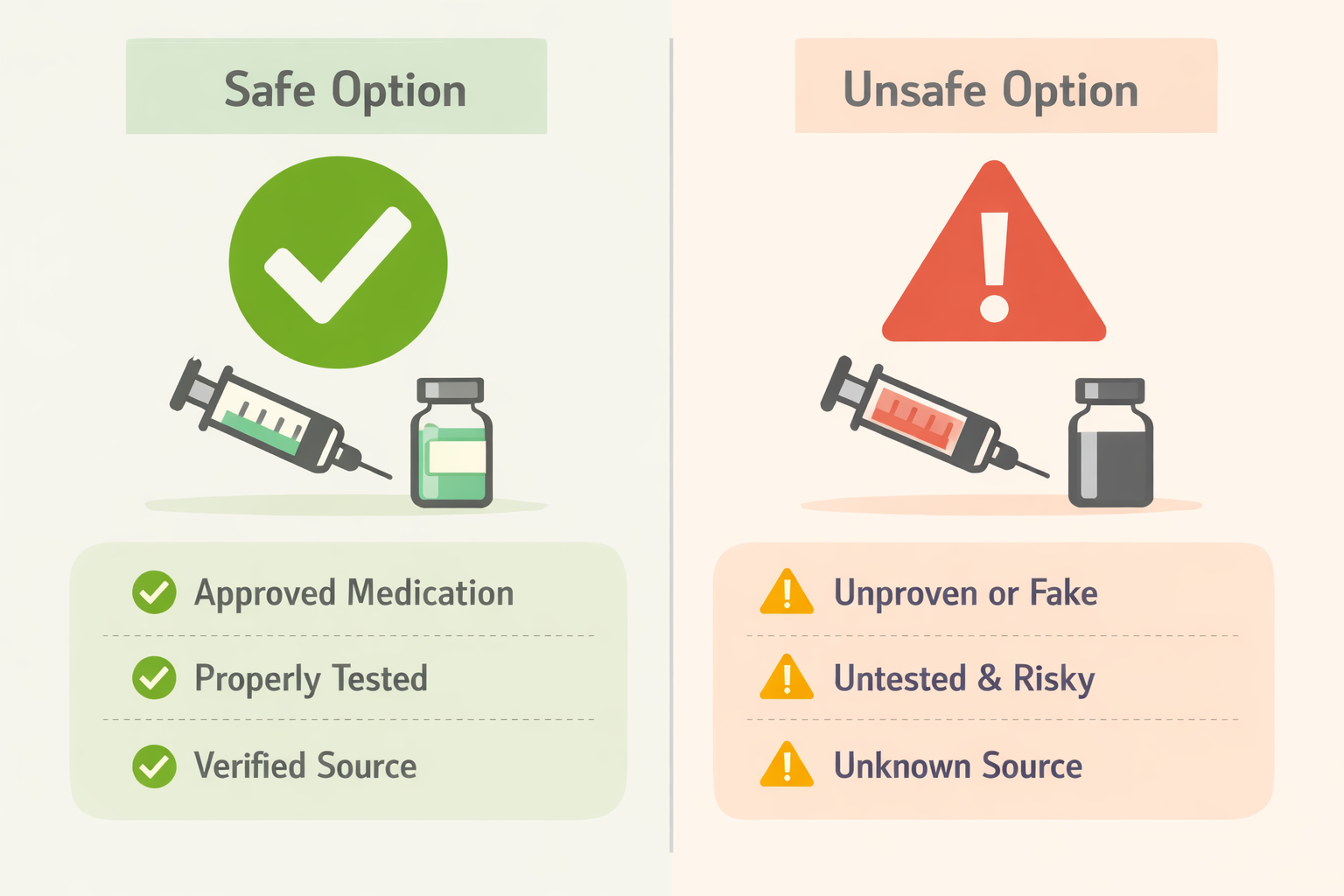
These products are called “gray” because they exist in a legal and regulatory gray area. They’re not approved by the FDA, not made in licensed pharmacies, and not subject to any safety oversight. In short, they’re DIY drugs—and that’s dangerous.
The Dangers of Gray GLP-1s
Here’s why experts are sounding the alarm:
1. No FDA Approval
Gray GLP-1s are not approved for human use. They’re often labeled “for research purposes only,” meaning they haven’t been tested for safety, efficacy, or purity.
2. Risk of Contamination
Mixing peptides at home is not sterile. Without proper lab conditions, these injections can be contaminated with bacteria, toxins, or incorrect ingredients, leading to infections or allergic reactions.
3. Incorrect Dosing
GLP-1 medications require precise dosing. Too much can cause severe nausea, vomiting, or even hospitalization. Too little may be ineffective. DIY mixing increases the risk of dosing errors.
4. Legal Trouble
Buying and using research-grade peptides for personal use is illegal in many states. Distributors of gray GLP-1s are operating outside the law, and users could face legal consequences.
5. No Medical Supervision
GLP-1s affect blood sugar, digestion, and mental health. Without a doctor’s guidance, users may overlook serious side effects like gallbladder inflammation, suicidal thoughts, or interactions with other medications.
What Are Compounded GLP-1s?
Compounded GLP-1s are custom-made versions of GLP-1 medications prepared by licensed compounding pharmacies. These pharmacies are allowed to make medications when:
The FDA-approved version is in shortage.
A patient has a specific medical need that can’t be met with the standard product (e.g., allergies to ingredients, need for a different dosage or delivery method).
Compounded medications are legal and can be safe—if made by reputable pharmacies that follow strict guidelines.
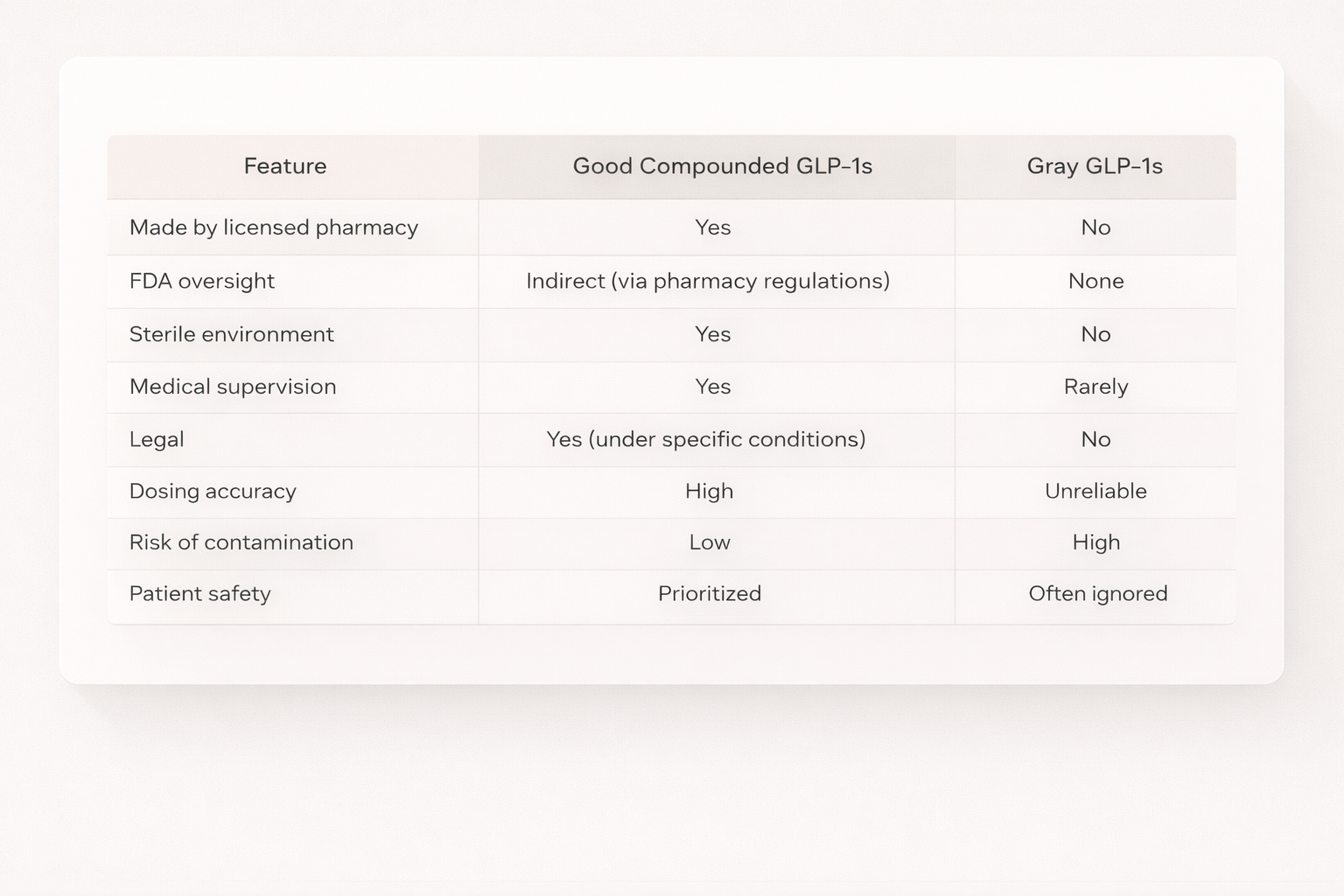
Good Compounded GLP-1s vs. Gray GLP-1s
Why People Turn to Gray GLP-1s
Despite the risks, many people are tempted by gray GLP-1s because:
They’re cheaper. FDA-approved GLP-1s can cost hundreds or even thousands of dollars per month.
They’re easier to get. Some people struggle to get a prescription or face long wait times.
They’re promoted online. Social media influencers and forums often glamorize DIY weight loss solutions.
But saving money upfront can lead to costly health consequences later.
How to Spot a Good Compounding Pharmacy
If you’re considering a compounded GLP-1, here’s how to protect yourself:
Check for licensing. The pharmacy should be licensed in your state and registered with the FDA or state board of pharmacy.
Ask about sterile compounding. GLP-1s require sterile preparation. Not all pharmacies are equipped for this.
Look for transparency. Reputable pharmacies will explain where they source ingredients and how they ensure safety.
Get a prescription. You should only receive compounded GLP-1s through a licensed healthcare provider.
Avoid online-only providers. Be cautious of websites offering GLP-1s without a proper medical consultation.
Final Thoughts
Gray GLP-1s may seem like a clever workaround, but they’re a risky gamble. Without regulation, medical oversight, or quality control, these DIY drugs can do more harm than good. Legitimate compounded GLP-1s—made by licensed pharmacies for specific medical needs—are a safer alternative, but even they require careful vetting.
In the end, weight loss and health should be pursued with safety, science, and support—not secrecy and shortcuts.