
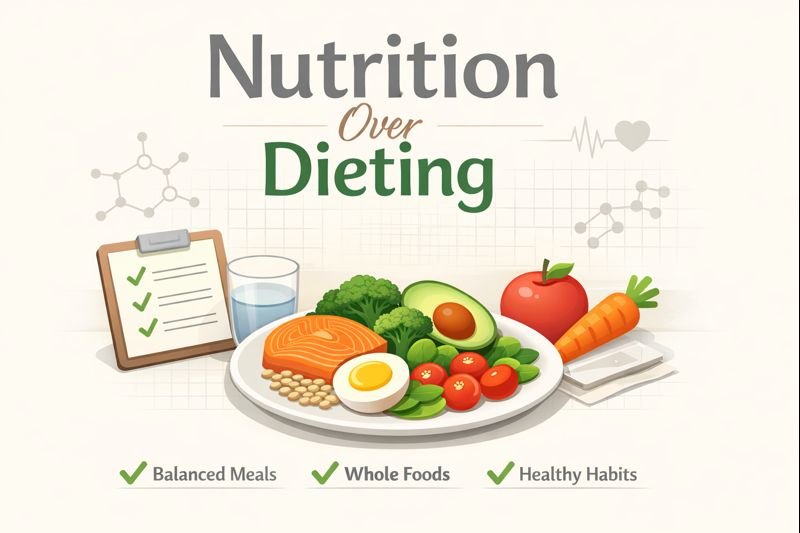
Nutrition Over Dieting: A Smarter Path to Sustainable Weight Management
A science-backed approach to weight management that prioritizes nutrition, consistency, flexibility, and mindset over restrictive dieting, helping people build sustainable habits, better health, and a healthier relationship with food long-term.
Nutrition, Not Dieting: The Correct Way to Sustainable Weight Management
If you’ve ever felt trapped in the cycle of dieting — counting calories, cutting carbs, skipping meals — you’re not alone. Millions of people chase weight loss through restrictive plans that promise fast results but rarely deliver lasting change. There is a radically different approach: nutrition over dieting. It’s not just semantics — it’s a mindset shift that can transform your body and your relationship with food.
The Problem with Dieting
Dieting doesn’t work long-term. Most diets fail because they’re built on restriction, not sustainability. Diets often:
Create unrealistic rules (no carbs, no fat, no fun)
Lead to binge-restrict cycles
Ignore individual needs and preferences
Focus on short-term weight loss, not long-term health
Instead of helping you build habits, diets often leave you feeling deprived, frustrated, and confused. Our philosophy is simple: if it’s not sustainable, it’s not worth doing.
Nutrition Is a Lifestyle, Not a Phase.
Nutrition is not about following a rigid meal plan — it’s about understanding how food fuels your body and making smart choices consistently. Here are Key principles for a Nutrition Action Plan that’s science-backed, flexible, and built for real life:
Eating whole, minimally processed foods
Prioritizing lean proteins, healthy fats, and complex carbs
Avoiding extremes — no starvation, no cheat-day binges
Building meals around fitness performance and recovery
Staying consistent, even when life gets busy
This isn’t about perfection. It’s about progress. We encourage people to build a nutrition plan that fits their lifestyle, preferences, and goals — not one that feels like punishment.
Breakfast Matters — But Not Just Any Breakfast
Breakfast can set the tone for your day:
Egg whites for lean protein
Oatmeal for slow-digesting carbs
Fruit for fiber and micronutrients
The goal isn’t just to eat — it’s to fuel. A balanced breakfast helps regulate blood sugar, curb cravings, and support muscle recovery. No fancy superfoods, no gimmicks — just smart choices that work.
The Missing Piece: Consistency
Our most powerful message is that consistency beats intensity. You don’t need to eat perfectly every day. You need to eat well on most days. Many people fail because they chase short-term results with extreme plans — then burn out.
Instead, we recommend:
Planning meals ahead
Keeping healthy snacks on hand
Learning to cook simple, nutritious meals
Understanding portion sizes without obsessing