
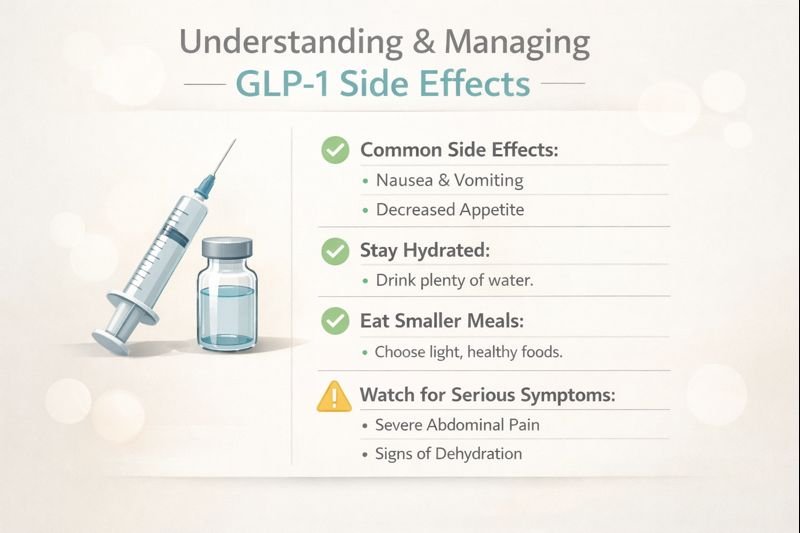
GLP-1 Side Effects:
What's Common,
What's Rare, and
How to Stay
Comfortable
This guide explains common GLP-1 medication side effects, why they occur, and practical ways to stay comfortable. It highlights what's mild versus rare, when to seek medical help, and how to stay on track safely.
Here’s a clear guide to the most common side effects of GLP-1 medications and practical tips to help you feel better while staying on track.
Nausea and Vomiting
Why it happens: GLP-1s slow down how quickly food leaves your stomach. This helps you feel full longer but can also trigger nausea or vomiting, especially when starting the medication or increasing your dose.
How to manage it:
Eat smaller meals more frequently.
Avoid greasy, spicy, or heavy foods.
Don’t lie down right after eating.
Sip ginger tea or chew ginger candies.
If nausea persists, ask your doctor about anti-nausea medication or adjusting your dose
Diarrhea and Constipation
Why it happens: GLP-1s affect the digestive system, which can lead to changes in bowel habits. Some people experience diarrhea, while others feel constipated.
How to manage it:
Drink plenty of water.
Eat fiber-rich foods like fruits, vegetables, and whole grains.
Avoid trigger foods such as dairy, caffeine, or processed snacks.
Consider a gentle stool softener or fiber supplement if needed.
If diarrhea lasts more than a few days, contact your healthcare provider.
Bloating and Gas
Why it happens: Slower digestion can cause food to sit in your stomach longer, leading to bloating or gas.
How to manage it:
Avoid carbonated drinks and chewing gum.
Eat slowly and avoid swallowing air.
Try probiotics or digestive enzymes (with your doctor’s approval).
Keep a food diary to identify triggers.
Injection Site Reactions
Why it happens: GLP-1 medications are injected under the skin. Some people experience redness, swelling, or itching at the injection site.
How to manage it:
Rotate injection sites to avoid irritation.
Use a cool compress after injecting.
Make sure you’re using clean technique and equipment.
If the reaction worsens or spreads, seek medical attention.
Fatigue or Low Energy
Why it happens: As your body adjusts to changes in blood sugar and appetite, you may feel more tired than usual.
How to manage it:
Get enough sleep and rest.
Eat balanced meals with protein and healthy fats.
Stay active with light exercise like walking or stretching.
Monitor your blood sugar levels if you have diabetes.
Headaches or Dizziness
Why it happens: These symptoms may be related to dehydration, low blood sugar, or changes in appetite.
How to manage it:
Drink water regularly.
Eat small, frequent meals to maintain stable blood sugar.
Avoid skipping meals.
If dizziness is frequent or severe, talk to your doctor.
Heartburn (Acid Reflux)
Why it happens: GLP-1s slow gastric emptying, which can cause stomach acid to back up into the esophagus—leading to heartburn or acid reflux. This is especially common if you eat large meals or lie down too soon after eating.
How to manage it:
Eat smaller meals and avoid overeating.
Stay upright for at least 2–3 hours after eating.
Avoid trigger foods like spicy dishes, citrus fruits, tomatoes, chocolate, caffeine, and alcohol.
Elevate the head of your bed or use a wedge pillow.
Over-the-counter antacids (like Tums) can help, but check with your doctor before using stronger medications like omeprazole or famotidine.
Rare but Serious Side Effects
While most side effects are mild and temporary, GLP-1 medications have been linked to rare but serious conditions:
Pancreatitis: Severe abdominal pain, nausea, and vomiting.
Gallbladder issues: Pain in the upper right abdomen, fever, or jaundice.
Thyroid tumors: A rare risk noted in some GLP-1 medications, especially in animal studies.
If you experience intense pain, fever, or other unusual symptoms, stop the medication and seek medical help immediately.
How Long Do Side Effects Last?
Most side effects occur during the first few weeks of treatment or after a dose increase. As your body adjusts, symptoms often improve. Many doctors use a “titration schedule,” starting with a low dose and gradually increasing it to minimize discomfort.
When to Call Your Doctor
Reach out to your healthcare provider if:
Side effects are severe or don’t improve.
You experience signs of an allergic reaction (rash, swelling, trouble breathing).
You have symptoms of pancreatitis or gallbladder disease.
You’re unsure whether your symptoms are related to the medication.
Final Tips for Comfort and Safety
Keep a journal to track symptoms and food triggers.
Follow your doctor’s dosing instructions carefully.
Don’t compare your experience to others—everyone reacts differently.
Stay informed and ask questions during checkups.